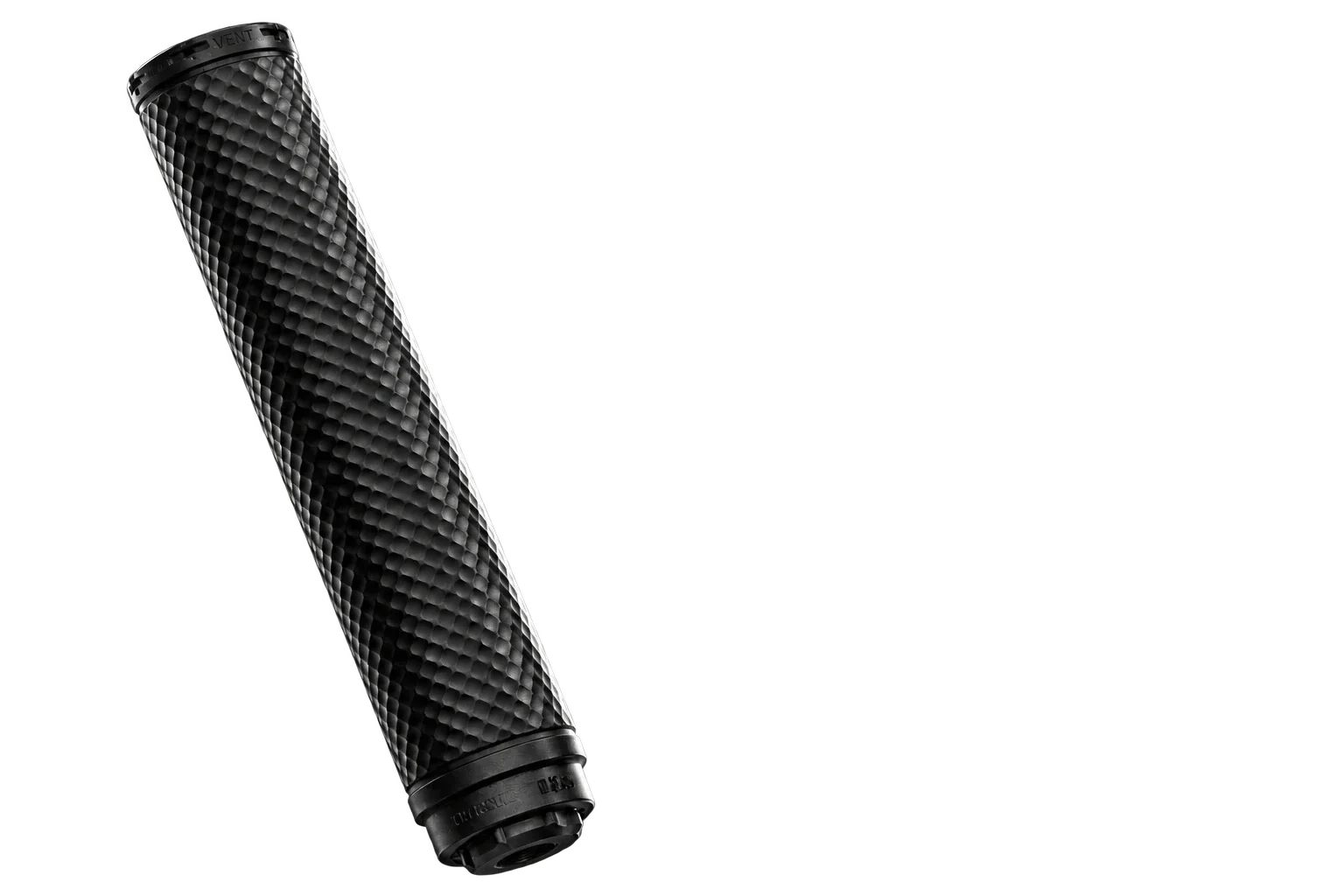
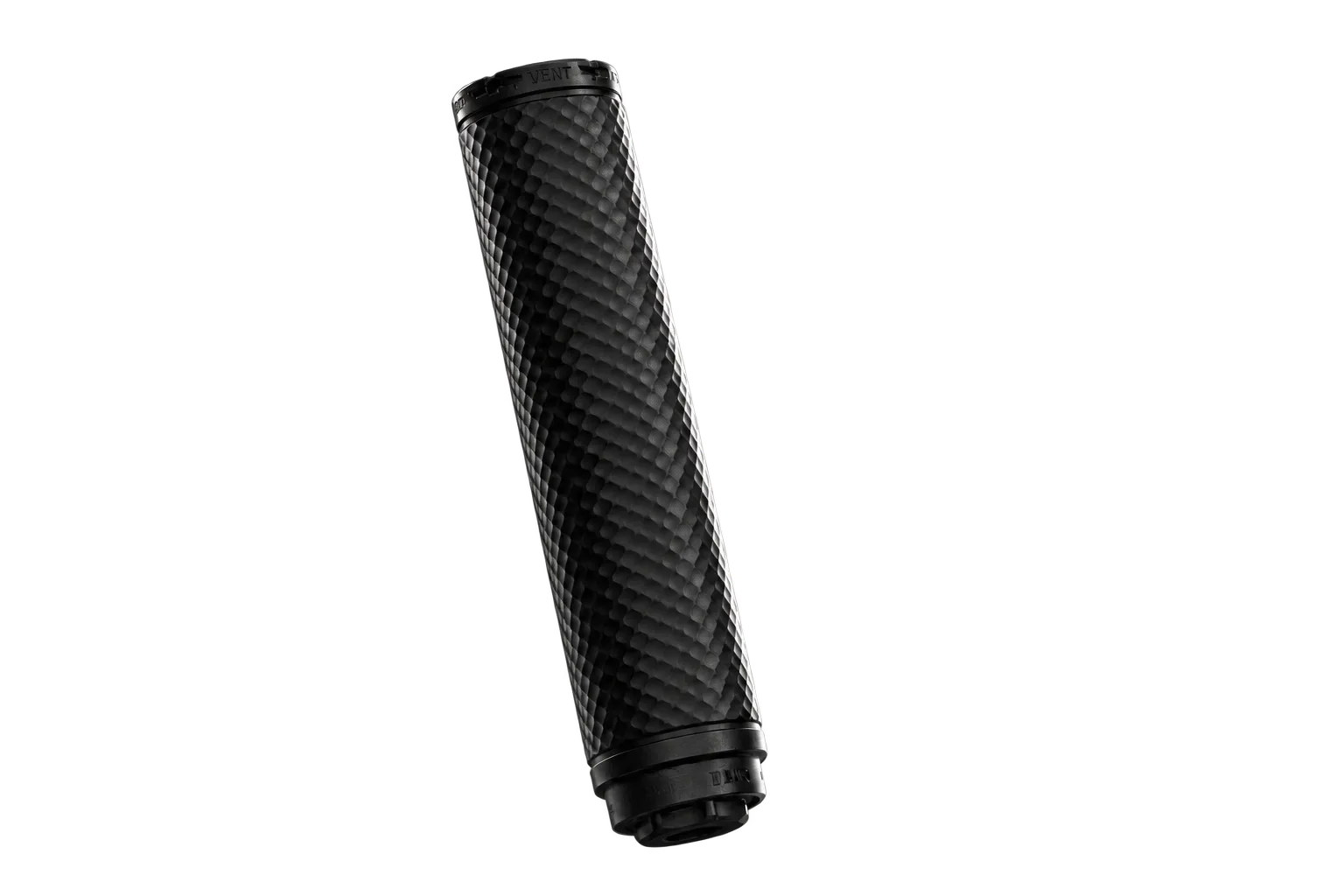
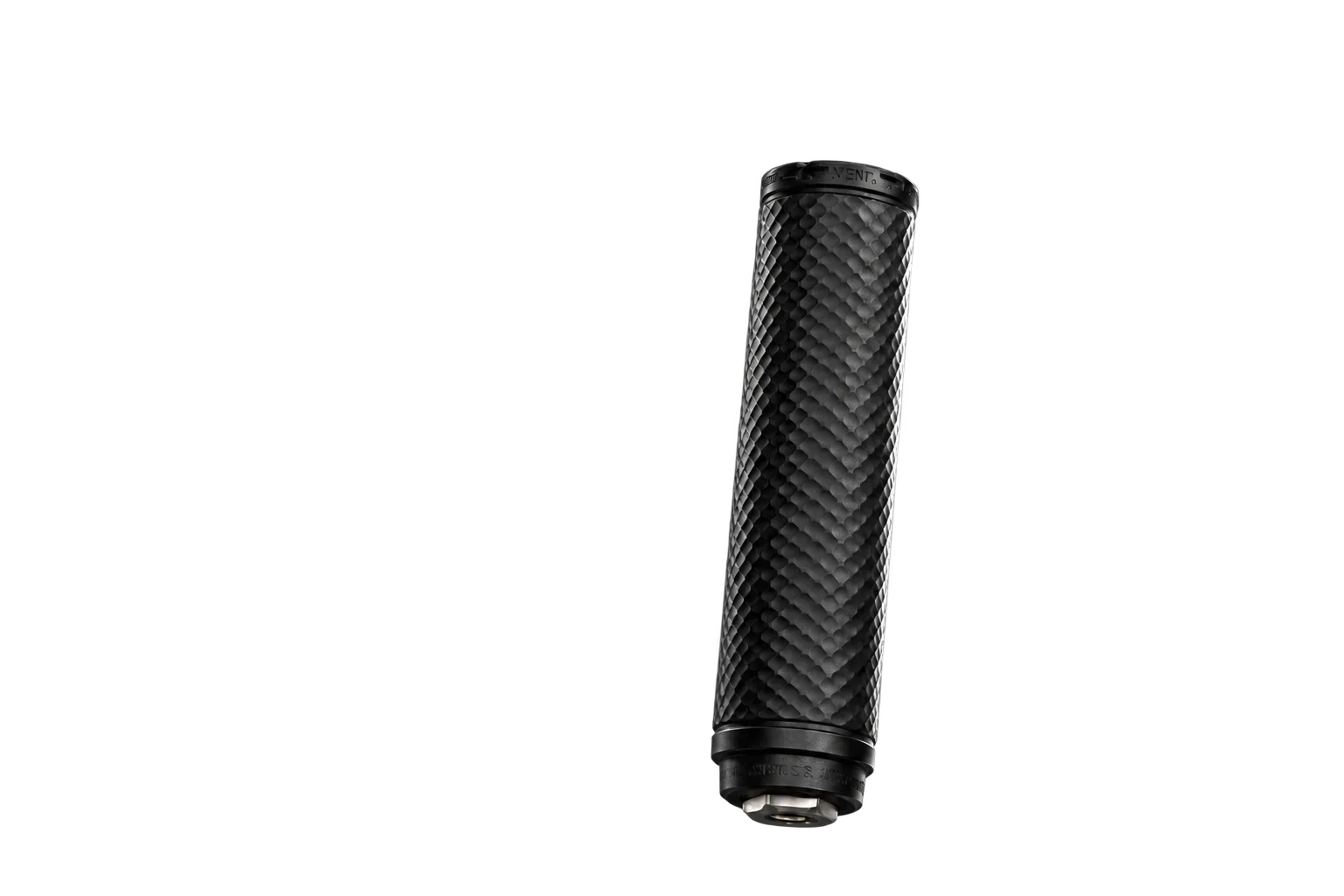
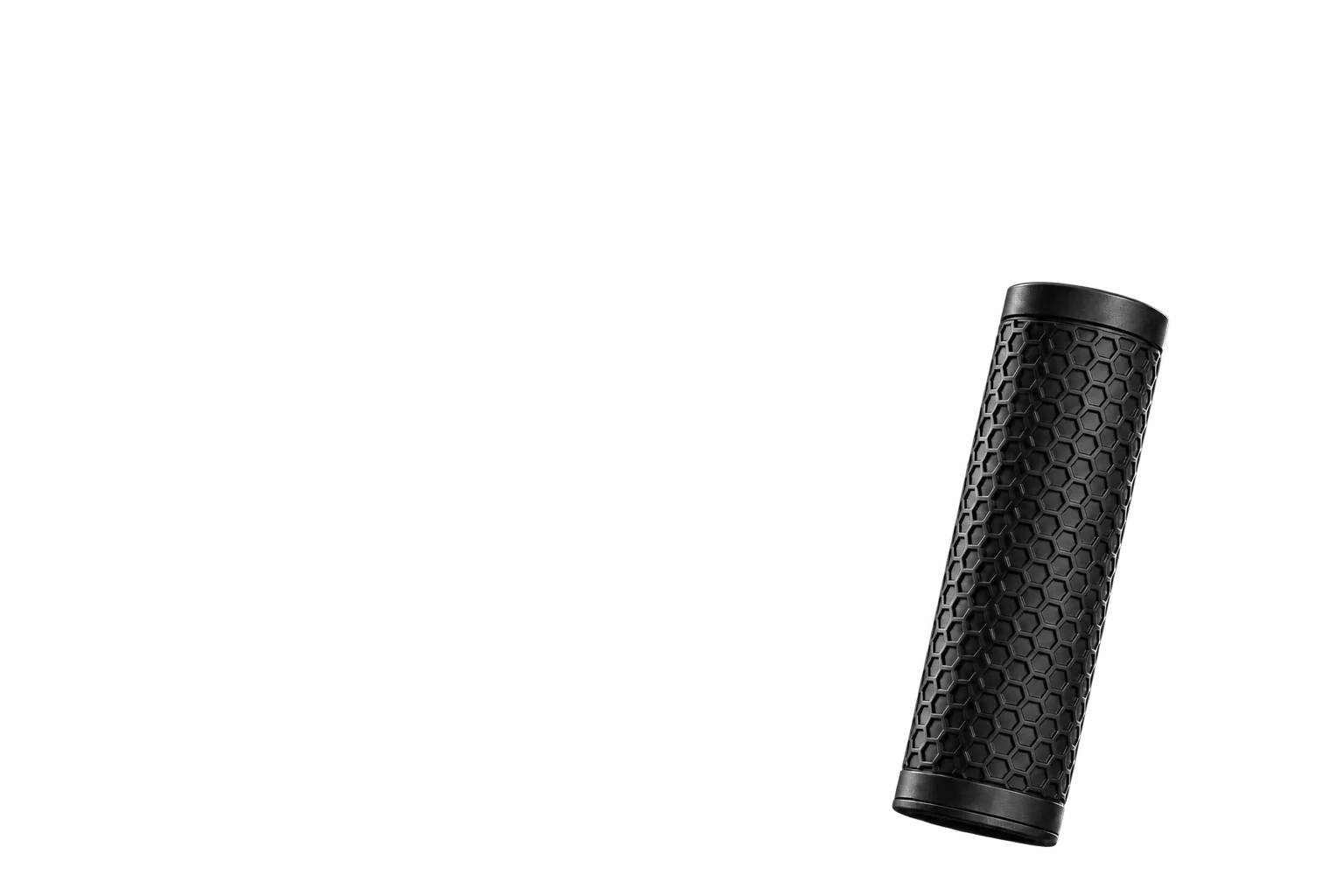
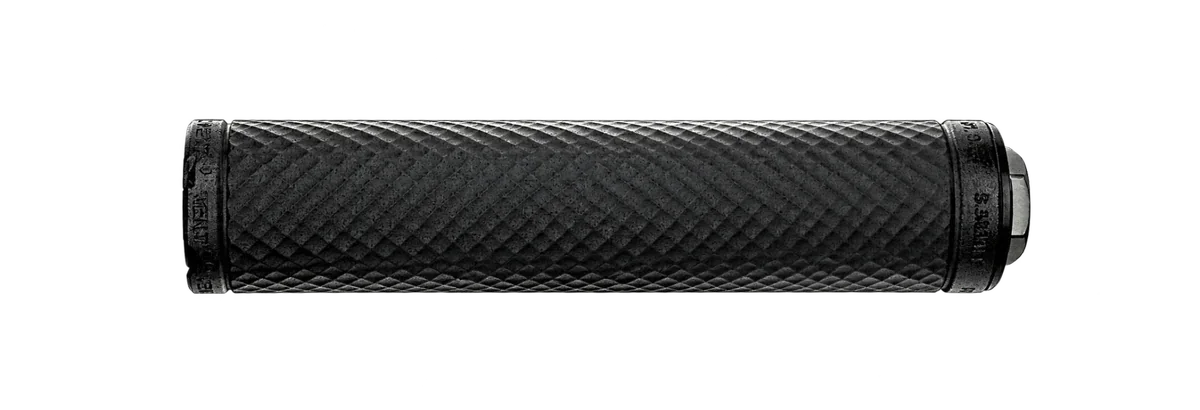
VENT 1 VENT 2 VENT 3
3D-printed titanium.
High strength at low weight.
A full-power .30-caliber rifle suppressor at 12.3 ounces. A 9mm PCC suppressor at just 8.9 ounces. And a 5.56 rifle suppressor at 11.75 ounces.
ENJOY FREE SHIPPING SITEWIDE Dismiss
PTR VENT Suppressors
Suppression. Reduced back pressure. Weight. Heat. And more. Most suppressors make you choose. We built the VENT so you don’t have to.

01 / Suppression
Superb noise suppression — up to 62.7 on independent PEW Science ratings.

02 / Technology
Patented porous structures formed inside one continuous body — not another baffle stack.

03 / Back pressure
PIP keeps gas moving through the suppressor instead of trapping it behind the muzzle.

04 / Weight
8.9 oz for the VENT 2 9mm, 12.3 oz for the VENT 1 full-power .30-cal.

05 / Heat
The SPIRITUS 5.56i trades titanium for Inconel, in just over six inches.

06 / Mounting
HUB 1.375×24 on VENT 1, VENT 3 and SPIRITUS, Alpha 1.125×28 on VENT 2 — direct-thread adapter included.
Suppression
VENT was built for sound suppression first.
Four suppressors, each engineered around one job rather than one design stretched to cover them all — down to 8.9 oz where the work allows it, Inconel where the heat demands it.
PEW Science rates them up to 62.7, measured independently on named host platforms with the full data published.
PIP technology
Conventional suppressors control expanding gas by restricting it, and restriction is what creates back pressure. VENT moves the gas instead, reducing sound, back pressure, and heat.
Innovation
Purposefully Induced Porosity (P.I.P.) puts controlled porous structures inside the suppressor body, creating internal geometry no machining can cut. Not a better baffle stack.
Pathways
Engineered pathways carry expanding gas across an enormous internal surface instead of trapping it behind the muzzle. High suppression, less back pressure.
Heat
The continuous structure spreads heat through the whole suppressor. On the SPIRITUS 5.56i, Inconel adds heat resistance for harder-use firing schedules.
Construction
Every VENT is one continuous piece of titanium or Inconel, additively manufactured.
Nothing to loosen. Nothing to index. No baffle stack to assemble.
Back pressure
Traditional suppression often comes with a trade-off. Restricting gas can increase pressure in the system — sending more gas toward the shooter, increasing ejection-port noise, accelerating bolt speed, and contributing to fouling.
VENT takes a different approach.
Within VENT's monolithic core, purpose-engineered pathways direct combustion gases across an expansive internal surface area, reducing the pressure driven back toward the action.
Less gas at the shooter. Less disruption to the host.
Materials
VENT 1 VENT 2 VENT 3
High strength at low weight.
A full-power .30-caliber rifle suppressor at 12.3 ounces. A 9mm PCC suppressor at just 8.9 ounces. And a 5.56 rifle suppressor at 11.75 ounces.
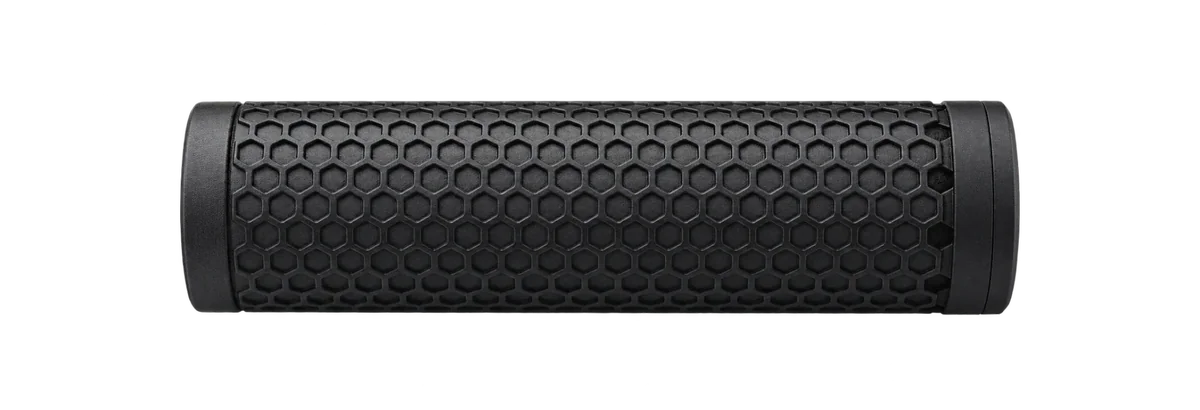
VENT SPIRITUS 5.56i
Different material. Same performance.
Greater heat resistance and durability for harder-use firing schedules, in a suppressor just over six inches long.
Independent testing
PEW Science independently tested all four VENT suppressors and published a Suppression Rating for each.
Every number below belongs to the exact configuration that produced it — host, barrel length, ammunition, and mounting configuration included.
VENT 1
Savage Model 10 · 20″ .308
Federal XM80 149 gr
Independent test configuration
VENT 2
HK SP5-A2 · 8.9″ 9mm
Speer Lawman 147 gr subsonic
Independent test configuration
VENT 3
MK18 · 10.3″ 5.56
Federal XM193 55 gr
Independent test configuration
SPIRITUS 5.56i
MK18 · 10.3″
M4A1 · 14.5″
Federal XM193 55 gr
Independent test configuration
The lineup
.308 / 7.62 rifle
$1,499
In stock
20″ .308 test host
9mm PCC / subgun
$1,339
In stock
HK SP5-A2 test host
5.56 rifle
$1,499
In stock
10.3″ MK18 test host
5.56 rifle
$1,249
In stock
MK18 · M4A1 test hosts
Specifications
| SPEC | VENT 1 | VENT 2 | VENT 3 | SPIRITUS 5.56i |
|---|---|---|---|---|
| Price 1 | $1,499.00 | $1,339.00 | $1,499.00 | $1,249.00 |
| Primary caliber | 7.62×51 / .308 | 9×19mm | 5.56×45 | 5.56×45 |
| Also rated for 2 | 6.5 Creedmoor · .300 BLK | .38 Spl · .357 Mag · .300 BLK | 5.7×28 | 5.7×28 · 4.6×30 |
| Application | Full-power rifle | PCC / subgun | AR / 5.56 rifle | Compact / hard-use 5.56 |
| Material | 3D-printed titanium | 3D-printed titanium | 3D-printed titanium | 3D-printed Inconel |
| Finish | PVD | — | — | DLC |
| Length | 8.74″ | 7.6″ | 7.75″ (w/o mount) | approx. 6.0″ (w/o adapter) |
| Diameter | 1.75″ | 1.5″ | 1.625″ | 1.625″ |
| Weight | 14.2 oz | 8.9 oz | 11.75 oz (w/o mount) | See product page 3 |
| Direct-thread adapter | 5/8×24 (included) | 1/2×28 (included) | 1/2×28 (included) | 1/2×28 (included) |
| Mount interface | 1.375×24 HUB | 1.125×28 Alpha | 1.375×24 HUB | 1.375×24 HUB |
| Barrel restrictions 4 | 7.62×51 · 6.5 Creedmoor: 12.5″ .300 BLK: none | 9mm · .38 Spl · .357 Mag: none .300 BLK subsonic: none .300 BLK supersonic: 8″ | 5.56×45: 10.5″ 5.7×28: none | 5.56×45: 10.5″ |
| Full-auto 5 | Limited | Limited | Limited | Limited |
| Suppression Rating 6 | 57.3 | 62.7 | 42.6 | 37.5 · 44.2 |
| Built for | Maximum rifle suppression | Quiet 9mm, low back pressure | Lightweight full-size 5.56 | Compact, heat-resistant |
1 Current catalog pricing; confirm at checkout.
2 Within current PTR caliber, ammunition and barrel-length guidance. Refer to the current product manual for your model.
3 SPIRITUS 5.56i weight is listed on its product page pending confirmation of the current production specification.
4 PTR barrel-length guidance. Independent test hosts used in PEW Science testing may be shorter and do not constitute PTR compatibility guidance.
5 Rated for limited full-auto use within PTR’s specified firing schedule. See the current product manual for the schedule applicable to your model.
6 PEW Science composite Suppression Rating in the specified test configuration. Not comparable across calibers or host platforms.
Need maximum .30 cal suppression?
Running a 9mm PCC or subgun?
Want lightweight, full-size 5.56?
Need a short Inconel 5.56 for hard use?
Kits
Owners often come back for a second caliber. The kits get you there in one order.
Three calibers · Titanium
All-titanium coverage across full-power rifle, PCC, and 5.56 — the lightest of the three kits.
Kit pricing from catalog
Three calibers · Titanium
The same three-caliber coverage, with the compact Inconel SPIRITUS in the 5.56 slot for harder-use firing schedules.
Kit pricing from catalog
All four
Every VENT suppressor, and both 5.56 options — lightweight full-size titanium and compact Inconel.
Kit pricing from catalog
“It is insanely quiet. It doesn't gas me out. And it is extremely light, even for its size.”
Owners describe a marked drop in signature — and a tone they actually like.
This is the one VENT 2 and VENT 3 owners single out most: less gas coming back on semiautos.
The titanium models do their work without loading the front of the gun.
Owners report buying — or planning to buy — another VENT for another caliber.
Ownership
VENT 1, VENT 3 and SPIRITUS 5.56i use the 1.375×24 HUB interface, giving access to the widely adopted HUB mounting ecosystem. VENT 2 uses 1.125×28 Alpha, the interface appropriate to its 9mm PCC and subgun application.
A direct-thread adapter is included with every model — 5/8×24 on VENT 1, 1/2×28 on VENT 2, VENT 3 and SPIRITUS. Additional mounting options vary by model and host platform.
PTR publishes caliber compatibility and barrel-length guidance for each model. Current guidance: 10.5″ minimum for 5.56 on VENT 3 and SPIRITUS 5.56i; 14″ advised and 12.5″ acceptable for 7.62×51 on VENT 1, with the shorter length potentially reducing suppressor life. No minimum was identified for 5.7×28, 4.6×30 or subsonic .300 BLK.
On test hosts versus guidance: independent testing used 10.3″ 5.56 hosts. That is the configuration those published measurements belong to — it is not PTR compatibility guidance and does not change the 10.5″ minimum. Always verify your host platform against the current product manual before installation.
All four VENT suppressors are rated for limited full-auto use within PTR's specified firing schedule. Schedules differ by model and material — the Inconel SPIRITUS 5.56i is the platform built around harder-use applications.
Firing schedules are safety-critical. Take the round counts and cooldown intervals for your model from the current PTR product manual rather than from marketing material.
VENT's porous internal architecture is designed to be maintained, and PTR publishes intervals for it. Current guidance is approximately every 1,500 rounds for rifle suppressors and every 1,000 rounds for pistol and PCC suppressors, with a more complete service at roughly 5,000 rounds depending on use.
Approved approaches include soaking, ultrasonic cleaning, rinsing and full drying, using products such as CAT 206, Breakthrough or Bore Tech. Intervals and approved methods vary by model and material — follow the current manual, as unapproved methods can affect the structure and your warranty.
Confirm alignment after any mount change, and check before firing.
Coverage and service procedures are detailed in the current PTR product manual.
Purchasing
A suppressor doesn’t arrive like a normal order. Here’s exactly how it works, start to finish.
STEP 01
Order directly on PTR-US.com, or through an authorized PTR dealer. You pick your dealer as part of the order.
STEP 02
Your suppressor ships to that dealer, not to you. They handle the paperwork, tell you what they need, and walk you through the current timeline.
STEP 03
Transfer complete. You collect your VENT from your dealer and go shoot it.
PTR suppressors purchased through PTR-US.com are transferred to an authorized dealer. Your dealer will determine whether that transfer is completed using a Form 4 or Form 4473, based on current federal, state, and local requirements.
Strong suppression. Reduced back pressure. Built by caliber.
All four VENT suppressors are available to purchase online. Also available at Silencer Shop (opens in a new tab) and through authorized PTR dealers nationwide.
A low back pressure suppressor reduces the pressure retained in the firearm while still reducing sound signature. It matters most on semiautomatic rifles and PCCs, where suppressor back pressure influences gas at the shooter and how the operating system behaves. VENT suppressors use PTR's PIP architecture to combine strong suppression with controlled gas movement.
Purposefully Induced Porosity is PTR's patented suppressor technology — a different approach to suppressor design rather than a refinement of conventional baffle geometry. It builds controlled porous structures and engineered gas pathways into an additively manufactured suppressor body, increasing gas interaction while managing sound, back pressure and heat.
Independent testing by PEW Science documented minimal first-round pop on the VENT 2 and SPIRITUS 5.56i test configurations. First-round pop behavior depends on the host platform, ammunition and conditions, so results in other configurations may differ.
PTR's current guidance is a 10.5″ minimum for 5.56 on VENT 3 and SPIRITUS 5.56i. For 7.62×51 on VENT 1, 14″ is advised and 12.5″ is acceptable, with the shorter length potentially reducing suppressor life. No minimum was identified for 5.7×28, 4.6×30 or subsonic .300 BLK.
Independent testing configurations used shorter hosts in some cases and do not constitute PTR compatibility guidance. Always confirm against the current product manual for your model.
PTR builds two 5.56 suppressors with different priorities. VENT 3 is a lightweight titanium 5.56 suppressor designed around full-size suppression with reduced back pressure. VENT SPIRITUS 5.56i is a compact Inconel suppressor prioritizing shorter length, heat resistance and harder-use durability.
VENT 2 is the dedicated 9mm suppressor in the VENT family, built for PCCs, subguns and roller-delayed platforms. Its 3D-printed titanium construction, PIP architecture and 8.9-ounce weight combine strong 9mm suppression with reduced back pressure and low added muzzle weight.
VENT 1 is PTR's full-power .30 caliber rifle suppressor, designed around .308 and 7.62×51. It combines 3D-printed titanium construction, PIP technology, reduced back pressure characteristics and independently tested sound suppression at 12.3 ounces.
VENT 1 and VENT 2 are both rated for .300 BLK within current PTR caliber, ammunition and barrel-length guidance. Requirements differ between subsonic and supersonic loads, so confirm the current guidance for your specific model and host in the PTR product manual before use.
Current PTR guidance is approximately every 1,500 rounds for rifle suppressors and every 1,000 rounds for pistol and PCC suppressors, with a more complete service around 5,000 rounds depending on use. Approved methods include soaking, ultrasonic cleaning, rinsing and full drying. Follow the current manual for your model — unapproved methods can affect the structure and your warranty.
All four models are rated for limited full-auto use within PTR's specified firing schedule. The schedule differs by model and material; the Inconel SPIRITUS 5.56i is built around harder-use applications. Take round counts and cooldown intervals from the current product manual.
VENT 1, VENT 3 and VENT SPIRITUS 5.56i use the industry-standard 1.375×24 HUB mounting interface. VENT 2 uses the 1.125×28 Alpha interface, appropriate to its 9mm application. Always verify mount compatibility and installation requirements for your specific firearm before use.
Yes. Additive manufacturing is what makes the controlled porous structures and internal gas pathways possible — geometry that would be difficult or impossible to machine conventionally. Every VENT is built as a single continuous structure: VENT 1, VENT 2 and VENT 3 in titanium, the SPIRITUS 5.56i in Inconel for compactness, heat resistance and durability.
PTR suppressors purchased through PTR-US.com are transferred to an authorized dealer. Your dealer will determine whether that transfer is completed using a Form 4 or Form 4473, based on current federal, state, and local requirements. Your dealer will also advise you on what they need from you and the current timeline.


